


- Key Takeaways
- Why Use a Handover Checklist For A Transfer Helper in Singapore?
- Phase 1: The Pre-Interview & Screening Stage For A Transfer Helper in Singapore
- Phase 2: The Interview & Agreement For A Transfer Helper in Singapore
- Phase 3: The Official Handover (MOM Procedures) For A Transfer Helper in Singapore Through an Agency
- Phase 4: Day 1 – The Physical Handover Checklist For A Transfer Helper in Singapore
- Phase 5: Days 2–7 (First Week) Stabilisation Checklist For A Transfer Helper in Singapore
- Legal Obligations for Employers Hiring Transfer Maids in Singapore
- Cost Considerations for Hiring a Transfer Maid in Singapore
- Common Mistakes Made by A Transfer Helper in Singapore
- Need Professional Assistance Hiring a Transfer Maid in Singapore?
- Frequently Asked Questions (FAQs)
Finding the right domestic helper isn’t always easy. For many families in Singapore, hiring a transfer maid, someone already here and looking for a new employer, is often the go-to choice.
The benefits are clear. You get to meet and interview the helper in person. She already knows how things work in Singapore, and you can get help much faster than when you hire from overseas.
Even with the convenience of hiring a transfer helper in Singapore, a structured handover is still essential. It helps you verify documents, understand working preferences, and ensure a seamless start for both parties.
To help you avoid surprises, here’s a step-by-step handover checklist. Use it to check all the important details and start your working relationship off right.
Key Takeaways
- Screen thoroughly before paperwork. Verify documents (Work Permit, passport validity, employment history) and speak to the current employer to spot red flags early. This prevents inheriting problems and saves time on mismatched hires.
- Align expectations during the interview. Use scenario-based questions and agree on salary, rest days, phone usage, and house rules upfront. If the helper can repeat your top 5 expectations back to you, you reduce “I didn’t know” conflicts later.
- Follow MOM procedures in sequence. Confirm eligibility, align transfer dates with the current employer, apply accurately, and purchase insurance only after receiving IPA. Simple errors (name spelling, dates) cause the most delays.
Why Use a Handover Checklist For A Transfer Helper in Singapore?
When hiring a new maid from overseas, agencies usually manage a thorough induction. With a transfer maid in Singapore, the process is often handled directly between employers, with minimal or no agency involvement.
A handover checklist ensures that nothing important is missed. It helps you stay compliant with Ministry of Manpower (MOM) requirements and ensures that both you and your helper are clear on household responsibilities, childcare, and eldercare duties before employment begins.
With these preparations in place, you’re ready for the first crucial stage: pre-interview and screening for a transfer helper in Singapore.
Phase 1: The Pre-Interview & Screening Stage For A Transfer Helper in Singapore
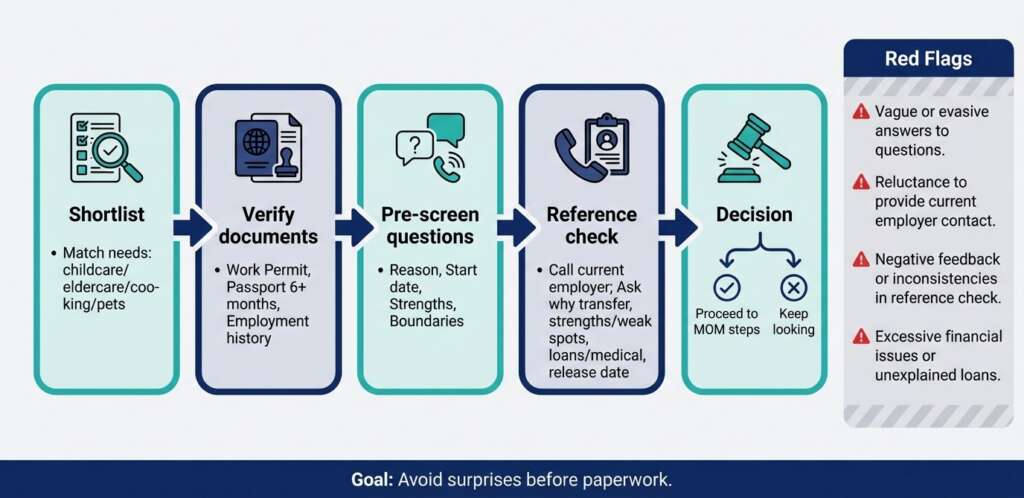
Before you start paperwork, check that the helper is a good fit and that the transfer fits within your timeline.
Think of this phase as your risk filter. It helps you avoid mismatches like the wrong skill set, unclear reasons for transfer, or unrealistic start dates, before you get caught up in urgency.
A solid screening process matters, especially with transfer helpers. You’re not just hiring a person, you’re also inheriting routines, good or bad, from their last job.
Documents to Verify
- Valid Work Permit: Check her current Work Permit status and ensure it’s valid for more than 30 days. If her permit is already cancelled, she’s usually on a Special Pass and must return home unless MOM says otherwise.
- Passport validity: Ensure her passport has at least 6 months’ validity left. This helps you avoid unnecessary admin delays.
- Employment history: Ask about her past employers and how long she stayed with each. If she’s changed jobs a lot in a short time, find out why. Consistent, verifiable reasons (like employer relocation) are less of a concern.
- Skill match: If you need childcare or eldercare, ask for real examples of what she’s done, like school runs, meal prep, or helping an older adult shower safely. Don’t settle for a simple ‘can do’.
Pre-screening questions to ask the helper (quick but revealing)
- “What is your main reason for transfer, and what are you looking for in your next employer?”
- “What is your earliest possible start date, and is it flexible?”
- “Which duties do you do confidently, and which ones do you need guidance on?”
- “Are you comfortable with pets / elderly care / young children / cooking certain foods?”
Questions for the Current Employer
Talking to the current employer is one of the most important steps. Be polite but direct, and listen for specific examples instead of just general praise.
- “Why is she being transferred?” (Look for consistency and clarity in the answer.)
- “What are her strengths and weak spots in your household?”
- “Does she have any ongoing medical conditions, restrictions, or loans/salary deductions I should know about?”
- “How is she with children/pets/elderly?” (Tailor this to your specific needs.)
- “What routines work best for her, and what tasks need close supervision?”
- “When is the earliest release date, and can you support a short overlap for training if needed?”
Pro tip: If possible, ask one scenario question (e.g., “What happens when the child refuses to bathe?” or “How does she manage a fall-risk elderly person?”). The level of detail in the employer’s answer can tell you a lot about real-world performance.
Phase 2: The Interview & Agreement For A Transfer Helper in Singapore
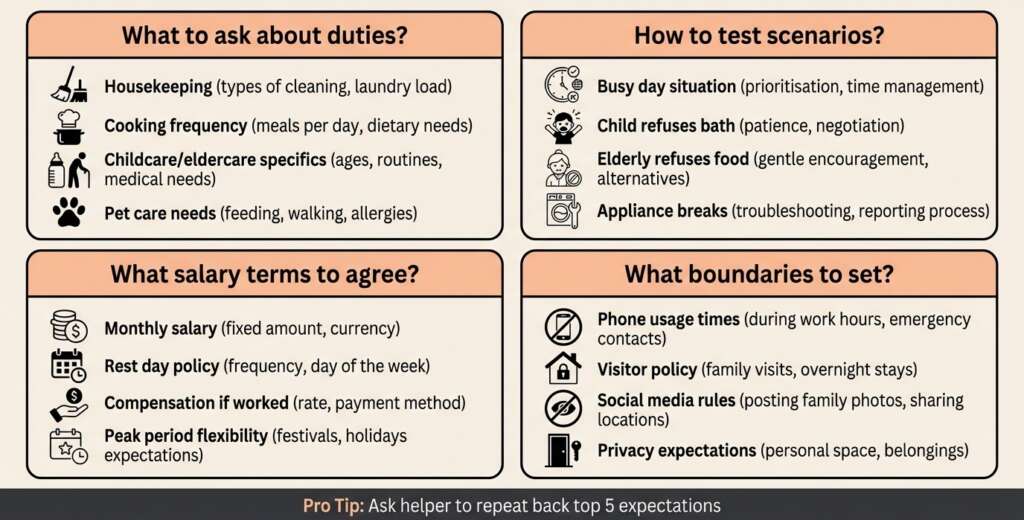
Once you’ve shortlisted a candidate, use the interview to set clear boundaries and check if she’s a practical fit for your family.
Don’t just ask if she can do something. Ask how she does it, what standards she follows, and how she likes to communicate. This is where many working relationships succeed or fail.
If you’re hiring a transfer maid for a quick start, remember: speed only works if you set clear expectations from the beginning.
Interview structure (15–30 minutes that covers what matters)
- Confirm duties: housekeeping, cooking, childcare/eldercare, pet care, marketing, etc.
- Test scenarios: one childcare/eldercare scenario + one “busy day” scenario.
- Agree on routines: wake-up time, school runs, meal times, and cleaning frequency.
- Set boundaries: rest days, phone usage, privacy rules, visitor policy.
- Confirm start date and any transition/overlap expectations.
Key areas to agree (and what to ask)
- Salary & off days: Be clear about the monthly salary, rest days, and any extra pay if she works on her day off. Most transfer helpers get one rest day a week, but what matters is that everyone understands the agreement from the start.
- Ask: “What rest day arrangement are you comfortable with?” and “Are you okay with our household’s peak periods (e.g., school terms, elderly appointments)?”
- Mobile phone usage: Set clear rules for when she can use her phone—like during breaks, after finishing tasks, or once the kids are asleep.
- Ask: “How do you usually communicate with your family?” and “Are you comfortable keeping the phone away during childcare/eldercare duties for safety?”
- Dietary needs & cooking: Make sure she’s comfortable with the food your family eats, and check for any religious or personal restrictions. Agree on how often she’ll cook, whether she can follow recipes, and if you want healthier meals.
- Ask: “What dishes do you cook confidently?” and “Can you follow a recipe exactly if we have dietary needs?”
- House rules & privacy: Be clear about visitors, social media use, confidentiality, and your family’s privacy.
- Ask: “What house rules helped you do well in past homes?”
Pro tip: Wrap up the interview by repeating your top 5 expectations, like duties, rest days, phone rules, routines, and start date. Ask her to repeat them back to you. This helps prevent any ‘I didn’t know’ problems later.
Phase 3: The Official Handover (MOM Procedures) For A Transfer Helper in Singapore Through an Agency
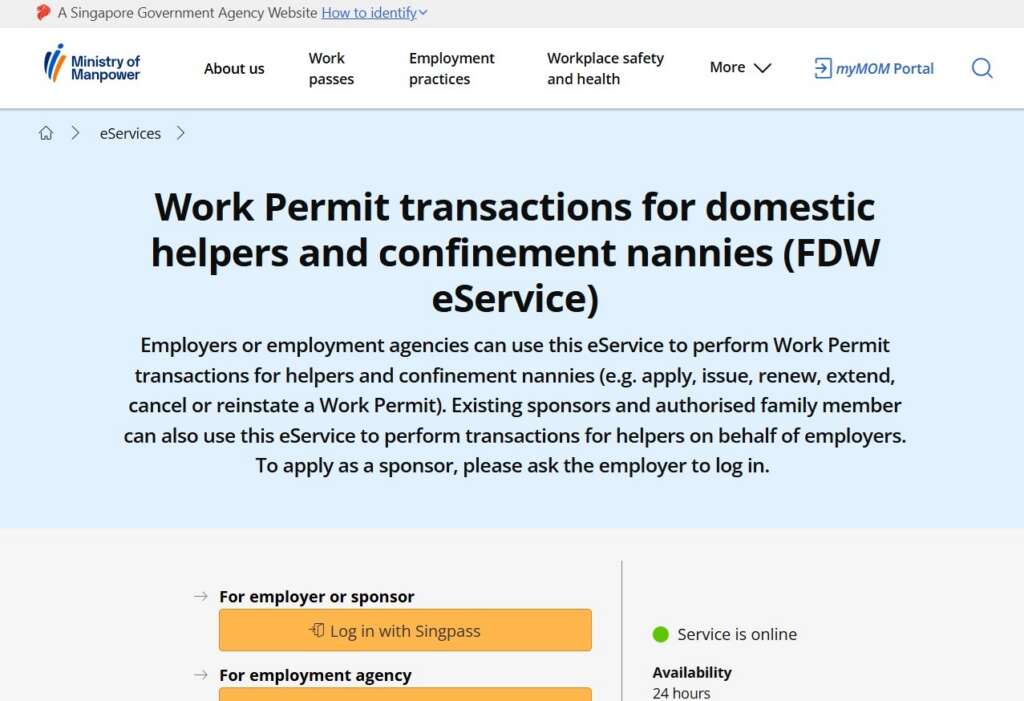
When transferring a maid in Singapore, the handover must comply with MOM requirements and timelines. Delays usually happen due to mismatched dates, missing declarations, or incorrect details, especially when the current employer’s release schedule changes.
When you work with a licensed agency, the MOM process is handled end-to-end so you don’t have to track every form and deadline yourself.
What you’ll confirm (fast decisions = faster transfer)
- Your preferred start date and whether you need any overlap for training
- Agreed employment terms (salary, rest day arrangement, key duties)
- Any important household needs (childcare/eldercare routines, pets, dietary rules)
What the agency will manage for you
- MOM eligibility checks and documentation readiness
- Coordination with the current employer on consent and release timing
- Preparation and submission of the Work Permit application and supporting documents
- Insurance and security bond arrangements aligned with the transfer date
- Final Work Permit issuance coordination so the helper can start smoothly
With the MOM paperwork in place, the next phase focuses on preparing for your helper’s arrival.
Phase 4: Day 1 – The Physical Handover Checklist For A Transfer Helper in Singapore
The day the helper arrives at your home is critical. Use this checklist to ensure nothing is lost in translation.
Day 1 Handover Essentials
- Welcome & reset expectations (10 minutes): Reconfirm the agreed-upon duties, the rest day arrangement, and the key house rules. A calm, respectful tone helps your new working relationship get off to the right start.
- Inspect personal belongings (briefly and respectfully): Check luggage upon arrival to ensure no prohibited items are brought in, confirm she has essential personal effects, and clarify any large amounts of medication. Keep this practical and non-accusatory.
- Documents & safekeeping: Remind helper to store her passport and Work Permit. Remember: under Singapore law, you cannot force her to surrender these documents.
- Issue a written schedule: Provide a printed daily/weekly timetable and label the top priorities. Verbal instructions are often forgotten; a written schedule reduces stress and helps her deliver the standard you want.
- House tour & “what matters most”: Walk her through the home and explain how your household works: where things go, what’s fragile, what’s off-limits, and what “clean” looks like (especially kitchen and bathrooms).
- Appliance & safety demo: Demonstrate key appliances (washing machine, stove/induction hob, kettle, vacuum). Point out safety hazards (wet floors, gas/electric risks, balcony safety, childproof locks). Don’t assume she knows your specific models.
- Wi-Fi & communication: Connect her to Wi-Fi, if agreed, and restate the phone usage policy immediately, especially during childcare/eldercare or cooking, for safety.
- Emergency contacts & escalation rules: Show a printed list of emergency numbers (Ambulance, Police, your mobile, spouse/backup contact). Clarify “when to call you” vs “when to call an ambulance immediately”.
- Household essentials: Show where first-aid items, cleaning supplies, sanitary products, and essential household items are stored. Clarify what she can use freely and what needs permission.
Day 1 goal: By bedtime, your helper should know (1) her top duties, (2) safety rules, (3) how to contact you, and (4) the basic rhythm of your household.
Phase 5: Days 2–7 (First Week) Stabilisation Checklist For A Transfer Helper in Singapore
Day 1 is just the start. The first week is when you set the tone, confirm standards, and fine-tune routines. This helps prevent minor misunderstandings from turning into bigger issues.
Days 2–3: Set the rhythm
- Create a simple weekly plan: laundry days, bathroom schedule, marketing day, and meal planning.
- Confirm cleaning standards with examples: do one “model” bathroom and one “model” kitchen together so expectations are visual, not abstract.
- Label storage if helpful: cupboards, children’s items, pantry zones, cleaning tools.
- Clarify approval rules: what she can decide independently vs what needs permission (food delivery, visitors, purchases).
Days 4–5: Expand responsibility safely
- Introduce edge cases: what to do if a child has a fever, an elderly person refuses food, or a key appliance stops working.
- Cooking alignment: preferred portion sizes, spice levels, dietary rules, and how you store leftovers.
- Time checks: ensure school/appointment timelines are realistic and build buffer time.
- Safety refresh: balcony rules, wet floor signs, knife safety, and phone boundaries during supervision.
Days 6–7: Review & lock in routines
- Do a short weekly review: what went well, what was unclear, what to adjust next week.
- Update the schedule: refine timings based on reality (not assumptions).
- Confirm rest day plans: timing, expectations for handover before she leaves, and emergency contact protocol.
- Agree on communication cadence: e.g., 5 minutes nightly for Week 1–2, then weekly check-ins.
First-week goal: By the end of Week 1, your helper should need fewer reminders, and you should have a stable routine you can maintain long-term.
Legal Obligations for Employers Hiring Transfer Maids in Singapore
Hiring a transfer maid in Singapore comes with specific legal responsibilities. Understanding these obligations ensures compliance with the Ministry of Manpower (MOM) and protects both you and your helper.
- MOM Compliance Reminders: Employers must adhere to MOM rules for work permits, including providing valid documentation, timely permit renewal, and compliance with salary and working hours regulations. Non-compliance can result in fines or legal action.
- Insurance Requirements: It is mandatory to maintain maid insurance covering personal accidents and medical expenses. Most agencies provide insurance as part of the employment package, but employers should verify coverage and ensure it remains active throughout the maid’s employment.
- Security Bond: A security bond (usually SGD 5,000) may be required for transfer maids if their previous bond has expired. This ensures employers follow proper procedures, including complying with work permit conditions.
- Rest Day Obligations: Employers must provide a weekly rest day, either on a fixed day or mutually agreed schedule. Paying a substitute rate if a rest day is worked is also required under MOM rules.
- Prohibited Practices: Employers must avoid prohibited practices such as withholding passports, imposing excessive work hours, or engaging in discriminatory treatment. Compliance with fair treatment laws is essential to maintain a lawful and respectful working relationship.
By staying on top of these legal requirements, employers can ensure a smooth transition for transfer maids while avoiding fines, disputes, or employment complications.
Cost Considerations for Hiring a Transfer Maid in Singapore
Hiring a transfer maid involves more than just the monthly salary. Understanding the full range of costs helps you budget realistically and avoid surprises.
- Transfer Fees: Agencies may charge a transfer fee to cover paperwork, interviews, and compliance with MOM regulations. Fees can range from SGD 1,500 to SGD 2,500 depending on the agency and the maid’s experience.
- Salary Negotiations: Transfer maids typically command higher salaries than new helpers, given their experience. This can vary based on work experience, skill set, and household responsibilities.
- Insurance Costs: Employers must maintain personal accident and medical insurance, which can be included in the agency package or arranged separately. Premiums generally is around SGD 280 or more per year, depending on coverage.
- Monthly and Miscellaneous Costs: Beyond salary, consider additional monthly expenses such as food allowances, if applicable. Budgeting around SGD 200 per month for these extras helps maintain clarity and avoid misunderstandings.
By factoring in these costs upfront, you can make a well-informed decision when hiring a transfer maid and ensure a smooth transition for both your household and the helper.
Common Mistakes Made by A Transfer Helper in Singapore
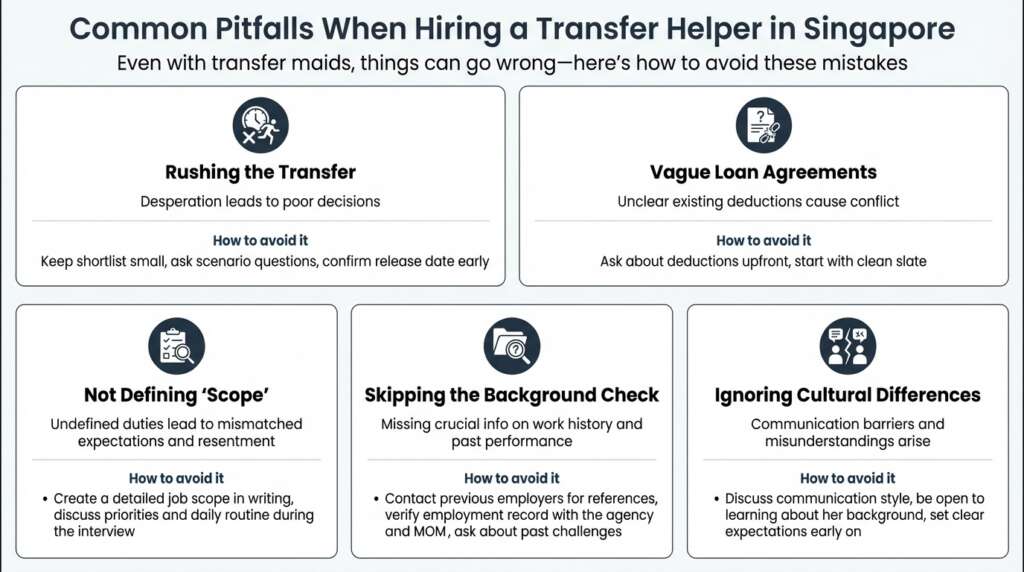
Every employer wants a smooth transition. Most problems happen because expectations aren’t clear, information is missing, or decisions are rushed.
Here are common mistakes employers make (and how to avoid them):
- Rushing the transfer: When you’re desperate, it’s easy to make a bad hiring decision. Don’t skip the reference check with the previous employer, even if you need help fast.
- How to avoid it: Keep your shortlist small, ask scenario-based questions, and confirm the release date early so you’re not forced into last-minute compromises.
- Vague loan agreements: If your helper has loans or salary deductions from her last job, make sure they are cleared or clearly documented before she starts with you.
- How to avoid it: Ask about any deductions upfront and ensure you understand what will continue (if anything) after transfer. Ideally, start with a clean slate.
- Not defining ‘standard of work’: Problems often come up when ‘clean’ or ‘done’ means different things to you and your helper.
- How to avoid it: Demonstrate your preferred method once (e.g., the bathroom, kitchen, or laundry folding) and use a written weekly schedule so expectations remain consistent.
- Too many rules on Day 1: Giving too many instructions at once can overwhelm your helper and lead to mistakes.
- How to avoid it: Prioritise safety and essentials on Day 1, then build routines progressively during the first week (Phase 5).
- Skipping regular feedback: If you only give feedback when you’re upset, things can go downhill fast.
- How to avoid it: Do a short nightly check-in in Week 1, then shift to weekly reviews once routines are stable.
Need Professional Assistance Hiring a Transfer Maid in Singapore?
Hiring a transfer maid in Singapore can save you time and hassle, as long as you treat it as a step-by-step process rather than a quick fix.
You’ll get the best results by nailing the basics: screen carefully, ask the right questions, follow MOM steps in order, and onboard your helper properly from Day 1 through the first week.
Use the handover checklist in this guide to avoid surprises, protect your home, and help your helper succeed from day one. When expectations are clear and routines are steady, you’re much more likely to build a strong, lasting working relationship.
Handling the paperwork for a transfer helper in Singapore can be tedious. Ensure a stress-free experience by letting our experts handle your documentation.
Contact Best Housekeeper SG today for a consultation.
Frequently Asked Questions (FAQs)
How long does the transfer process take in Singapore?
Unlike hiring a new maid from overseas, hiring a transfer maid is significantly faster. If both parties (current employer and new employer) are efficient with the paperwork, the transfer can be completed in as little as 1 to 2 weeks, depending on the Ministry of Manpower (MOM) approval speed.
Do I need an agency to hire a transfer helper?
No, it is not mandatory to use an agency. Many employers in Singapore choose to do a direct hire transfer to save on agency fees. However, using an agency can help with background checks, paperwork, and mediation if issues arise.
What fees are involved in hiring a transfer maid?
Key costs include the MOM administrative fee for the Work Permit application/issuance, the security bond, and medical insurance. You may also need to pay a transfer fee to your current employer, if agreed, though this is less common.
Can I request a short trial or observation period before committing?
In practice, there isn’t an official “trial” that lets you employ the helper informally. If you want extra confidence, do a more extended interview (or a second interview), request detailed references, and agree on clear performance expectations for the first 2–4 weeks. If you need help assessing fit, consider engaging a licensed agency to support screening.
What should I do if the helper’s skills are good, but her work pace is slow?
Start by simplifying priorities: identify the top 3 daily tasks that must be completed, then build efficiency over time. Use a written schedule, demonstrate your preferred workflow (e.g., kitchen clean-up sequence), and do short check-ins to remove bottlenecks. Avoid comparing her to previous helpers; focus on measurable improvements week by week.