


- Key Takeaways
- Why Are Myanmar Maids Popular in Singapore?
- Services Provided by a Myanmar Maid Agency That Can Help Your Household
- The Hiring Process: From Selection to Deployment With a Myanmar Maid Agency in Singapore
- Estimated Costs of A Myanmar Maid Agency in Singapore
- Transfer Maids vs. New Helpers: Which Is Right for Your Household?
- Myanmar Maid Agency Legal Compliance and E-E-A-T Standards
- How Compliance Protects You as an Employer
- Looking for a Reliable Helper?
- Frequently Asked Questions (FAQs)
Finding the right domestic helper is one of the most crucial decisions a household in Singapore can make. It’s also a common one: Singapore continues to employ a large number of Foreign Domestic Workers (FDWs), reflecting the many families that rely on support with childcare, eldercare, and day-to-day household management.
With increasing demand for affordable, hardworking support at home, many employers are turning to helpers from Myanmar. However, navigating the Ministry of Manpower (MOM) regulations and finding a reliable candidate can be daunting, especially for first-time employers.
Quick context: The exact number of FDWs in Singapore changes over time. For the most current figure, refer to MOM’s latest published statistics.
In most years, the overall FDW population is reported in the hundreds of thousands, underscoring the established role of domestic help as a household solution in Singapore.
This is where a professional Myanmar maid agency in Singapore becomes invaluable. Beyond simply introducing you to a candidate, these agencies render comprehensive services that safeguard both the employer and the helper.
Understanding exactly what these agencies do can help you utilise their services to the fullest, ensuring a harmonious and long-term working relationship.
Key Takeaways
- Myanmar helpers are willing to learn household routines, making them suitable for first-time employers who are willing to teach.
- Agencies handle end-to-end recruitment logistics. From sourcing and pre-screening to Work Permit processing and Settling-In Programme coordination, a reputable agency manages the complex administrative burden so you don’t have to.
- Expect upfront costs between $2,300 to $6000. This covers agency fees, insurance, MOM administration, medical screening, and placement fees. Monthly costs (salary, levy, food, medical) should also be budgeted for.
Why Are Myanmar Maids Popular in Singapore?

In recent years, the number of Foreign Domestic Workers (FDWs) from Myanmar in Singapore has risen steadily.
While helpers from the Philippines and Indonesia have traditionally dominated the market, Myanmar helpers are gaining favour because they can be a practical fit for many households.
That said, it’s worth approaching this topic with a balanced mindset: every helper is an individual. A good match depends on your expectations, the helper’s experience, and how clearly routines and boundaries are communicated from day one.
Common Reasons Employers Prefer Myanmar Helpers
Many households choose Myanmar helpers for specific qualities that make their integration smoother:
- Long term considerations: Myanmar helpers may be more receptive to salary levels that suits young families, caregivers supporting elderly parents, or households managing a single income with budget considerations. .
- Temperament and attitude: Employers often look for helpers who are calm, respectful, and willing to follow house rules. Many Myanmar helpers are described as soft-spoken and polite, making them a good fit for homes with children or seniors.
- Willingness to learn: New helpers may arrive with basic English, but many are motivated to learn quickly. With structured training and clear instructions, they often pick up routines such as cleaning standards, simple cooking, and appliance usage.
Where Myanmar Helpers Excel
Myanmar helpers often stand out for their reliability, adaptability, and willingness to integrate into household routines. Employers who prioritise consistency, discipline, and a structured daily schedule usually find that Myanmar FDWs meet these expectations well.
- General Housekeeping: Myanmar helpers are typically diligent with cleaning and household chores. They can manage tasks such as laundry, dishwashing, ironing, and general tidying with attention to detail. With clear instructions and guidance on your household standards, they can quickly adapt to your preferred methods, ensuring a consistently clean and organised home.
- Childcare Support: Many Myanmar helpers have experience caring for infants, toddlers, or school-age children. They can assist with school runs, homework supervision, meal preparation for kids, and general child safety. Their calm temperament and patient attitude make them suitable for households where nurturing care is a priority.
- Elderly Companionship: Myanmar helpers are often chosen for their respectful and gentle approach, which works well when providing companionship or assistance to elderly family members. They can support mobility, help with daily routines, and offer reassurance, while maintaining the dignity and comfort of seniors.
- Special Household Tasks: Beyond standard duties, Myanmar helpers can adapt to specific household needs, such as caring for pets, running errands, or assisting with light meal preparation for special dietary requirements. Their willingness to learn new routines and follow structured guidance makes them versatile for a variety of household setups.
A Myanmar FDW’s strength lies in their combination of reliability, adaptability, and eagerness to learn. Households that clearly communicate expectations and provide structured routines often see the best results, with helpers quickly becoming an integral part of family life.
Potential Challenges (and How an Agency Helps)
No helper is without adjustment needs. Understanding potential challenges upfront helps set realistic expectations:
- Language and communication: A reputable agency can advise on suitable profiles and may provide language support or coaching, especially in the first month.
- Cooking preferences: Some helpers are new to Singaporean-style meals. Agencies and employers can support with recipe guidance, meal plans, and realistic expectations during the adjustment period.
- First-time overseas experience: Fresh helpers may need more guidance on high-rise safety, transport, and Singapore’s rules. This is precisely where agency coordination (e.g., Settling-In Programme and onboarding) is valuable.
Ultimately, the best outcome comes from choosing a helper based on job fit (skills and experience), personality fit (communication and attitude), and support fit (how well the agency supports both employer and FDW after placement).
Services Provided by a Myanmar Maid Agency That Can Help Your Household

A professional Myanmar maid agency in Singapore does much more than just provide a biodata. They act as intermediaries, managing recruitment, training, legal requirements, and logistics to ensure that both the employer and the helper enjoy a smooth, hassle-free experience. Here is what you can expect:
Sourcing and Pre-Screening
Agencies maintain recruitment networks in Myanmar (often through licensed partners and training centres) to source candidates from both rural and urban areas. The practical value of an agency here is quality control: rather than browsing hundreds of profiles blindly, you get a shortlist that is aligned to your role requirements.
A thorough pre-screening process typically includes an interview to understand the helper’s motivation, willingness to care for children or seniors (if needed), comfort with pets, and basic familiarity with household tasks. Many agencies will also highlight the helper’s employment history if the helper has worked overseas.
What you should ask for during pre-screening:
- Clear, recent biodata with accurate work history (where applicable).
- Skills checklist mapped to your household needs (infant care, dementia care, cooking, etc.).
- Any known dietary restrictions, allergies, or medical notes that affect job fit.
- Video interview notes or recordings (if available) to assess communication and attitude.
Training and Skill Assessment
Many agencies work with training centres to prepare helpers before deployment. This matters because “experience” on paper does not always translate into job-ready skills. Practical assessment (not just classroom learning) helps employers understand what a helper can actually do.
Common training areas include:
- Basic English: household instructions, emergency phrases, and common Singapore terms.
- Housekeeping: cleaning sequence, laundry care, ironing, and hygiene expectations.
- Cooking basics: safe food handling and simple meals (with room to learn your preferences).
- Caregiving fundamentals: elderly mobility support, safe transfers, and basic infant handling.
- Safety protocols: fire safety, chemical handling, and high-rise window safety.
A helpful agency will also explain what the training does not cover (for example, specialised dementia care or tube feeding), so you can hire realistically and arrange additional training if required.
Work Permit and Immigration Processing
The administrative burden of hiring a helper can be significant, especially for first-time employers.
A Myanmar maid agency in Singapore typically supports you with MOM paperwork and ensures the correct sequence is followed, so you avoid delays caused by missing documents or incorrect declarations.
Agency support typically includes:
- Submitting the Work Permit application and arranging appointments where required.
- Arranging the security bond (where applicable) and guiding you on the eligibility criteria.
- Purchasing mandatory medical insurance and personal accident insurance for the FDW.
- Coordinating medical checks and ensuring documents are properly filed.
A trustworthy agency should also walk you through employer responsibilities, such as rest-day arrangements, timely salary payments, and suitable accommodation, so expectations are clear on both sides.
Settling-In Programme (SIP) Coordination
For first-time FDWs in Singapore, attending the Settling-In Programme (SIP) is mandatory. The agency schedules this course and ensures the helper attends upon arrival, facilitating a smoother transition into Singaporean culture and laws.
The Hiring Process: From Selection to Deployment With a Myanmar Maid Agency in Singapore
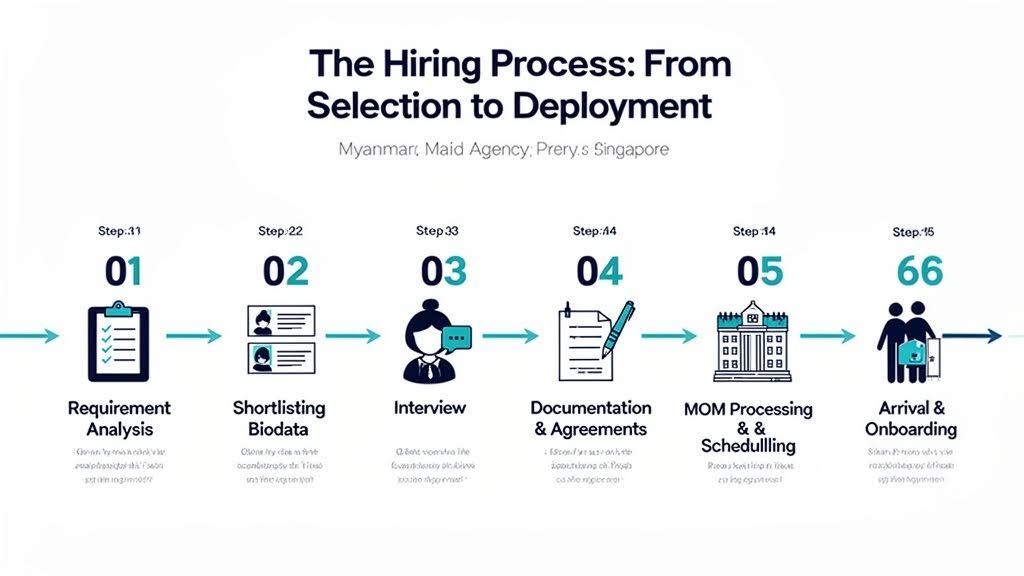
Understanding the timeline helps you plan childcare, eldercare, and household logistics. A structured approach by a professional Myanmar maid agency in Singapore typically follows a clear sequence, so both the employer and the FDW start on the proper footing.
Here’s a step-by-step of what happens (and what you should prepare)
- Step 1: Requirement analysis: The agency consults with you to clearly define the role. Be specific about tasks (e.g., toddler care, showering an elderly parent, cooking, pet care), your home layout, and any “no-go” duties (such as external window cleaning).
- Step 2: Shortlisting biodata: You receive profiles that match your criteria. A good shortlist includes not only experience, but also language ability, willingness to handle your core duties, and realistic salary expectations.
- Step 3: Interview: Interviews are usually conducted via video call (for new helpers) or in person (for transfer helpers). Beyond “Can you do housework?”, ask scenario questions such as “What would you do if the child has a fever?” or “How do you prioritise cleaning tasks on a busy day?”
- Step 4: Documentation and agreements: Once you select a helper, the agency prepares service agreements and clarifies key terms, including salary, rest days, job scope, and replacement terms. Read the fine print and request clarity on any admin fees.
- Step 5: MOM processing and scheduling: The agency coordinates Work Permit steps, insurance, and medical arrangements. For overseas helpers, this may include flight planning and pre-departure checks.
- Step 6: Arrival and onboarding: The helper completes the required programmes and medical checks. The agency then hands over the FDW to your household.
Setting Up the Helper for Success in the First 2 Weeks
The first two weeks are critical for establishing habits, expectations, and routines. Proper guidance and structured support during this period set the foundation for long-term success and productivity. Here’s what you can do:
- Create a simple daily routine (wake-up time, meals, cleaning blocks, rest time).
- Show the helper where items are kept and how to use the appliances.
- Write instructions down (especially if English is basic) and use photos where helpful.
- Agree on standards early (e.g., how you fold laundry, how often bathrooms are cleaned).
- Schedule check-ins on days 3, 7, and 14 to address misunderstandings calmly.
Estimated Costs of A Myanmar Maid Agency in Singapore
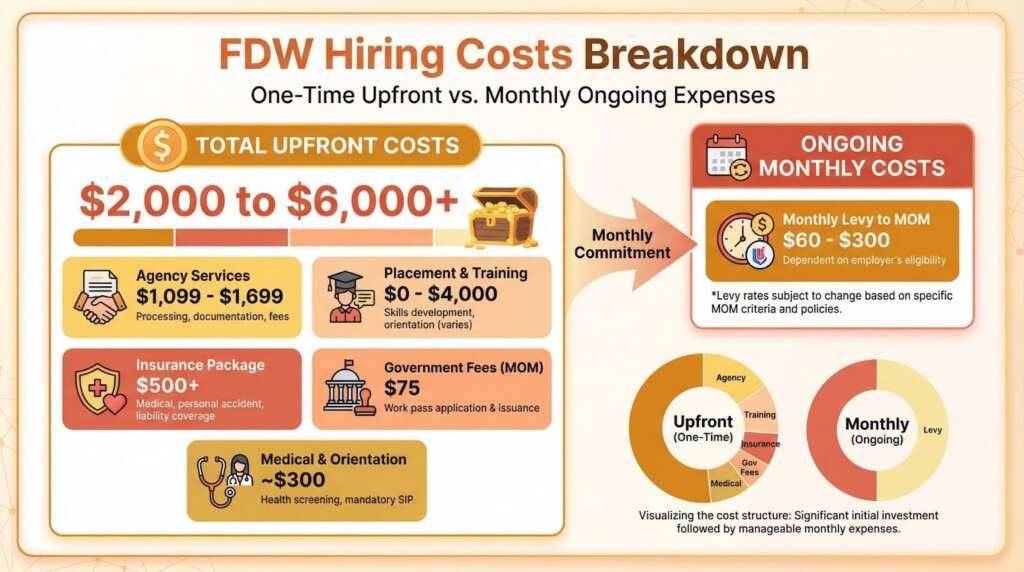
Cost is one of the most common concerns for employers, and it is also where confusion can arise if details are not clearly explained. A reliable Myanmar maid agency should provide transparent, itemised pricing before any commitment is made, so employers understand exactly what they are paying for.
Upfront Costs (One-Time Payment)
Estimated range: from $2,000 to $6,000+, depending on placement type and individual requirements.
| Cost Item | What It Covers |
| Agency Fee | Professional service fee covering recruitment, documentation, coordination, counselling, and post-placement support. Typically ranges from $1,099 to $1,699. |
| Placement Fee | Overseas placement and training-related costs, where applicable. This can range from $0 to $4,000, depending on the helper’s background and transfer status. Any repayment or instalment arrangement should be clearly documented and compliant with regulations. |
| Insurance & Security Bond | Mandatory medical insurance, personal accident insurance, and security bond. This generally starts from $500 and above, depending on coverage level. |
| MOM Administration Fees | The Official Ministry of Manpower charges for Work Permit application and issuance. Currently $75. |
| Medical Examination & SIP | Pre-employment medical check-ups, the Settling-In Programme (SIP), and related onboarding requirements. Estimated at around $300. |
| Other Practical Costs | Arrival essentials, transport for appointments, and other necessary onboarding expenses. |
Ongoing Monthly Costs to Plan For (beyond salary)
Beyond the initial placement, employers should also plan for recurring statutory and care-related expenses.
| Monthly Expense | Description |
| FDW Levy | Monthly levy payable to MOM, typically ranging from $60 to $300, depending on eligibility for levy concessions. |
| Food & Daily Living | Reasonable meals and daily necessities are provided at home. |
| Medical Care | Outpatient medical visits and healthcare expenses not covered under insurance, subject to policy terms. |
| Rest Day Arrangements | Weekly rest days as required by regulations, or compensation arrangements where mutually agreed and legally permitted. |
If any part of a quotation is unclear, employers should ask the agency to explain:
- Which fees are refundable or non-refundable
- What happens in the event of early termination
- What the replacement policy includes and its validity period
Clear pricing upfront helps prevent misunderstandings and ensures a smoother employment experience for both parties.
Note: All figures above are indicative estimates. Actual costs may vary depending on agency policies, placement circumstances, and individual employer requirements.
Transfer Maids vs. New Helpers: Which Is Right for Your Household?
Choosing the right domestic helper is not just about nationality; it’s about finding the best fit for your household’s needs, timeline, and level of training you can provide.
A professional Myanmar maid agency in Singapore typically categorises helpers into two types: new (fresh) maids arriving from Myanmar and transfer maids already in Singapore. Understanding the differences can help you make a more informed decision.
New Maids (From Myanmar)
These helpers are fresh from Myanmar and have not worked in Singapore before. They are usually adaptable and open to learning your household routines.
Pros:
- More affordable salary levels
- Flexible and willing to adopt your specific routines without habits from previous employers
Cons:
- Need time to adjust to Singapore life, transport, and local cuisine
- Need to teach and guide helpers
- Language skills may be limited at first
Best for: Families with simpler household tasks who have time and patience to train someone new and want a helper who can fully adapt to their routines.
Transfer Maids (Already in Singapore)
These helpers have worked in Singapore before and are familiar with the local lifestyle and expectations.
Pros:
- Proven track record and experience in Singapore households
- Comfortable with local food, transport, and language
- Can be interviewed in person, allowing for better fit assessment
Cons:
- Higher salaries as experience level increases
- May carry habits or routines from previous employers that you may need to adjust
Best for: Families who need immediate help with minimal training and prefer a helper who already understands Singaporean household expectations.
Note that a professional Myanmar maid agency in Singapore will not only show you available profiles but also ask the right questions upfront to match your household’s needs with the most suitable candidate. The best agencies are transparent about realistic timelines, potential challenges with either option, and the support they provide during the transition period, ensuring a smooth placement.
Myanmar Maid Agency Legal Compliance and E-E-A-T Standards
When hiring a domestic helper through a Myanmar maid agency in Singapore, legal compliance and professional standards are non-negotiable. Employers need to work with agencies that are not only licensed but also uphold high levels of Experience, Expertise, Authoritativeness, and Trustworthiness (E-E-A-T). This ensures both your household and the helper are protected throughout the employment period.
A reputable agency should consistently demonstrate the following:
- Full MOM Licensing: The agency must be officially registered and licensed by the Ministry of Manpower (MOM). This ensures they operate within Singapore’s strict employment laws.
- Adherence to Fair Employment Practices: They must follow ethical recruitment and hiring procedures, including transparent fees, fair treatment of helpers, and clear expectations for both parties.
- Clear and Comprehensive Contracts: Every placement should include contracts that clearly outline the responsibilities of the employer, the helper, and the agency. This helps prevent misunderstandings and ensures accountability.
- Post-Deployment Support: Quality agencies offer follow-up services such as counselling, mediation, or assistance in resolving disputes between the employer and the FDW, helping maintain a harmonious working relationship.
Working with a licensed, E-E-A-T-compliant Myanmar maid agency in Singapore not only protects your household legally but also ensures a smoother, more trustworthy hiring process for long-term success.
How Compliance Protects You as an Employer
Working with a compliant Myanmar maid agency in Singapore goes beyond meeting legal requirements. It safeguards your household against disputes, financial losses, and administrative complications.
A licensed agency is accountable. If they misrepresent a helper’s qualifications, fail to process Work Permit documents correctly, or breach their service agreement, you have recourse through MOM’s regulatory framework.
Practical steps to protect yourself:
- Verify the agency’s licence: Check the licence number and retention rates via the MOM directory. This confirms you are dealing with a credible, law-abiding agency.
- Understand policies upfront: Ask about replacement guarantees, refund terms, and post-placement support. Clear policies act as safeguards beyond regulatory compliance.
By choosing a licensed, professional agency, you ensure both legal protection and peace of mind while securing a reliable helper for your household.
Looking for a Reliable Helper?
Engaging a Myanmar maid agency in Singapore is about more than just filling a vacancy in your home; it is about finding a support partner who understands your family’s unique dynamics. From handling complex MOM paperwork to ensuring your helper is trained and settled, a professional agency takes the stress out of the hiring process.
Whether you require a fresh helper eager to learn or an experienced transfer maid ready to hit the ground running, leveraging the expertise of a licensed agency ensures legal compliance and peace of mind.
At BestHouseKeeper.sg, we specialise in matching households with dedicated and trained helpers from Myanmar. Our transparent processes and commitment to compliance ensure you find the right fit for your family without the hassle.
Contact us today to view our curated biodata or speak with our experienced consultants about your household needs.
Frequently Asked Questions (FAQs)
How much does it cost to hire a Myanmar maid in Singapore?
The total upfront cost typically ranges from $2,000 to over $6,000, depending on the agency package, insurance coverage, and loan amounts.
How long does the hiring process take?
For a transfer maid, it can be as fast as 1 to 2 weeks. For a new maid flying in from Myanmar, expect a timeline of 4 to 8 weeks to clear immigration, medicals, and mandatory training.
Can I replace the maid if she is not suitable?
Most reputable agencies offer a replacement guarantee within a specific period (e.g., 6 months). If the helper is not a good fit, the agency will facilitate a transfer and find a replacement, though administrative fees may apply.
What documents do I need as an employer to hire a helper?
Requirements can vary depending on your profile (for example, whether you qualify to employ an FDW). In general, employers should be prepared to provide identification details and household information for MOM processing. A good agency will guide you on the exact documents needed and help you avoid delays by checking that forms and details are complete and consistent.
Do Myanmar helpers need off-days, and how do rest-day arrangements work?
FDWs are entitled to rest days. Employers and helpers should agree clearly on the weekly rest day arrangement and any compensation in lieu (where mutually agreed). Your agency should explain standard industry practice, document the arrangement in writing, and remind both parties that a transparent agreement helps prevent disputes.